


23rd October 2026
Why Does a Mattress Develop Squeaking After Repeated Use? Separating Bed-Base Noise from Spring-Core Friction
-
 author
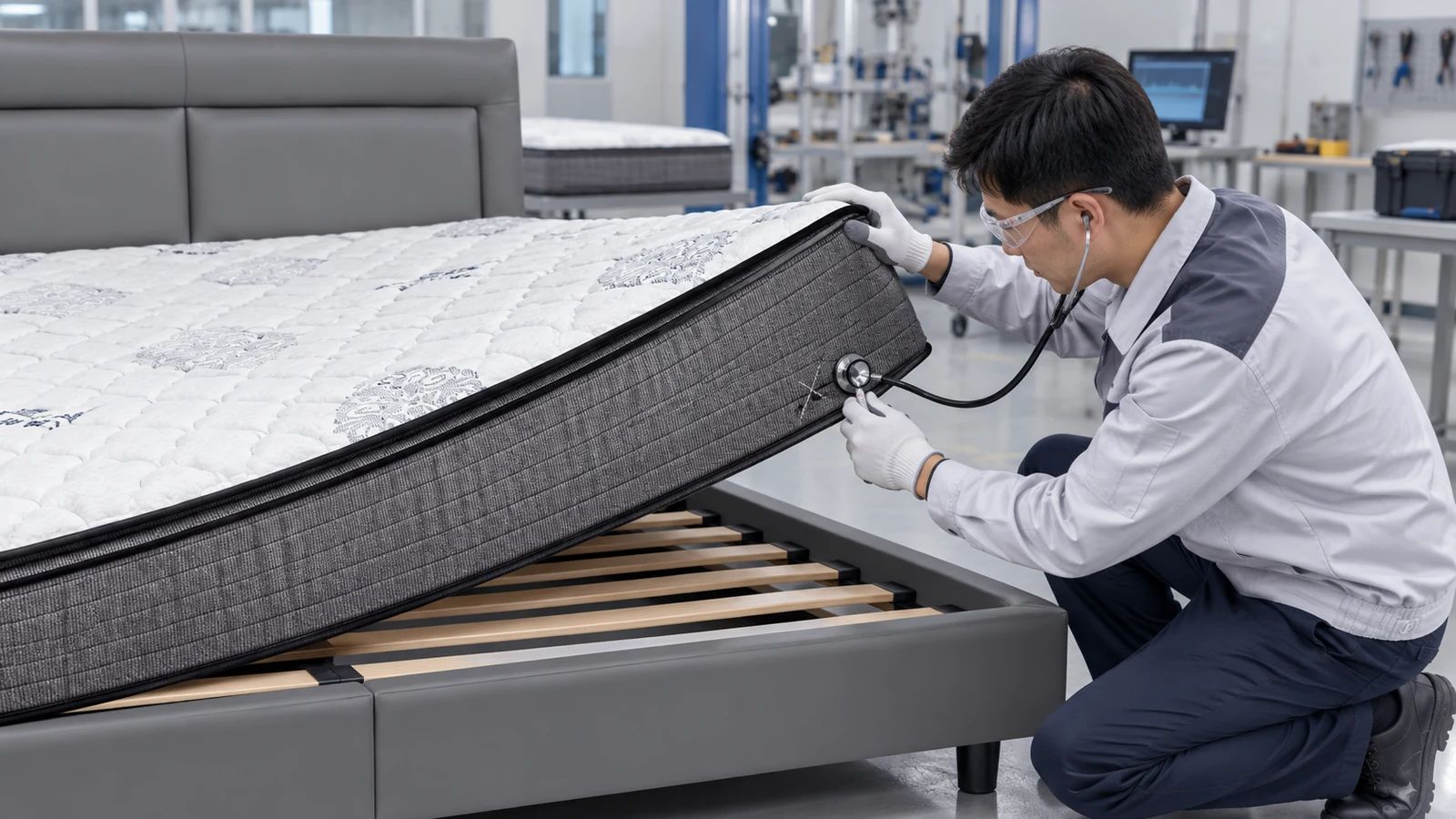
A listener at the mattress cannot tell whether the vibration began there or below it. When someone sits at the edge, the load can move an underlying rail and send its sound back through the sleep surface. By contrast, an issue within the product stays at the marked location when the mattress is tested on a different support. The isolation check is meant to tell these apart.
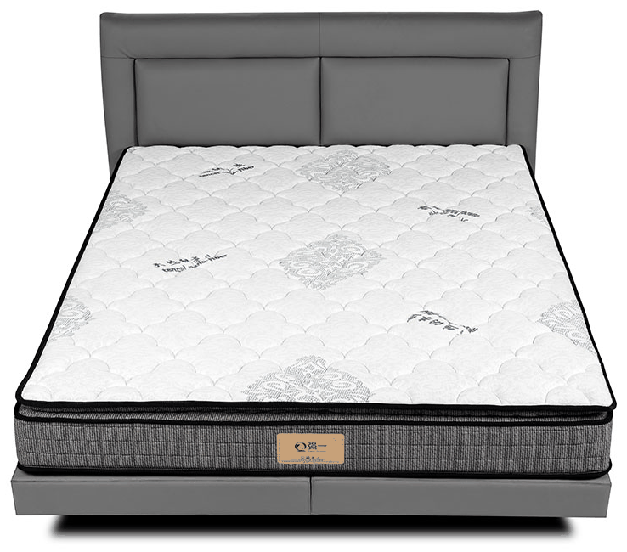
What Is the First Useful Change in a Noise Check?
Keep the bed in its reported arrangement until the sound can be repeated. Then change one condition. A quiet result after several simultaneous changes cannot show whether the accessory, base, motion, or load point made the difference.
Replay the movement, not a laboratory stunt
Edge sitting, rolling, and getting up bend the bed differently. Use the reported motion at the marked location and listen separately while weight is applied and released. If removing the protector silences the motion, put it back and repeat the same movement before treating it as the source.
The useful video shows where the person presses or sits. Do not force the bed with a narrow, unusually heavy push. A response heard only under that artificial load may have nothing to do with the reported complaint.
Test the base on its own
Press the empty base around the original zone. Watch the slat in its holder and the nearby supports as pressure goes on and comes off; either may move during only half of the cycle. If reseating one slat or tightening one fixing changes the result, repeat the original motion there before moving on.
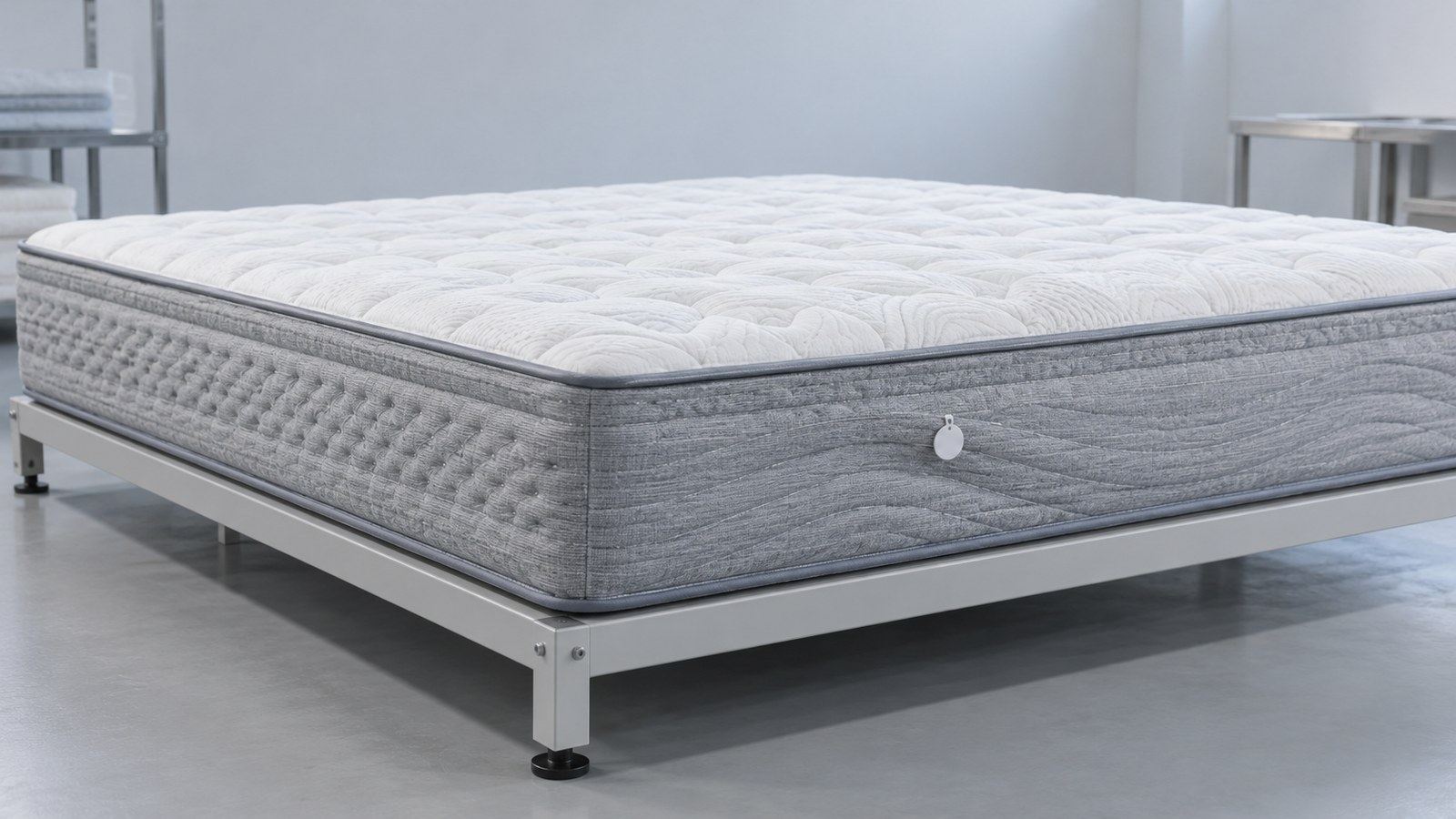
Where the empty base is quiet, transfer the mattress to an appropriate flat support and repeat the original movement. Silence on the second support sends the inspection back to the first base and its contact points. If the marked zone still sounds there, record that result and inspect the mattress next; the comparison has located the path, not the concealed part.
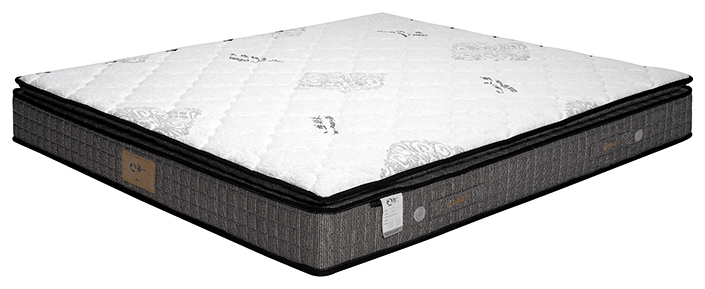
Which Changes Point to the Support, and Which Follow the Mattress?
Volume is a poor separator. Watch whether the location changes with rotation and whether the noise occurs during compression, recovery, or both.
Follow the noise through a rotation
Mark the original zone before turning the mattress. If the noise rotates with the product and remains on another suitable support, internal or cover-related contact becomes more plausible. If it stays next to the same rail, the room installation still leads the inquiry. The loading motion must remain the same during this comparison; otherwise the result mixes orientation with a new test.
External rubbing can also travel. Cover fabric may contact a retainer or headboard surface, so a slight shift can move or silence the sound. A base joint can seem central because the mattress spreads the vibration. These are reasons to follow what changes, not what sounds closest.
Look for a physical companion to the sound
A firmness, level, or edge-shape change in the noisy zone gives the inspector a place to recheck after the support comparison. It identifies where to look, but not which concealed component moved. Opening belongs later, after the support and external contacts have been isolated.
An early teardown changes cover tension and contact. Once that change silences the mattress, the original loading path cannot be checked again on the same sample.
What Should Happen After Each Isolation Result?
The check should reproduce ordinary use while keeping the comparison stable. Each result should decide the next comparison: base work, another support, or inspection of the marked mattress zone.
Use the same route across three conditions
Use a short set of zones—head, center, hip, and foot, with left or right where useful. Move through them on the complete bed, the empty base, and the comparison support. Use the same motion and load point each time so that a changed sound can be tied to the changed support.
Keep the base layout, product orientation, service time, and relevant furniture changes with the observation. For several rooms, count only the units actually checked. A single report should not be called a batch pattern, while repeated behavior under matching conditions deserves more than a casual dismissal.
State the observation without guessing the hidden part
“The noise remained in the same zone on a second suitable base” is useful because another person can repeat it. It justifies looking inside the marked zone, but it does not yet identify the spring unit as the source. A result tied to the first base calls for base or foundation work; a result that follows the mattress supports returning a representative unit or opening only the marked area.
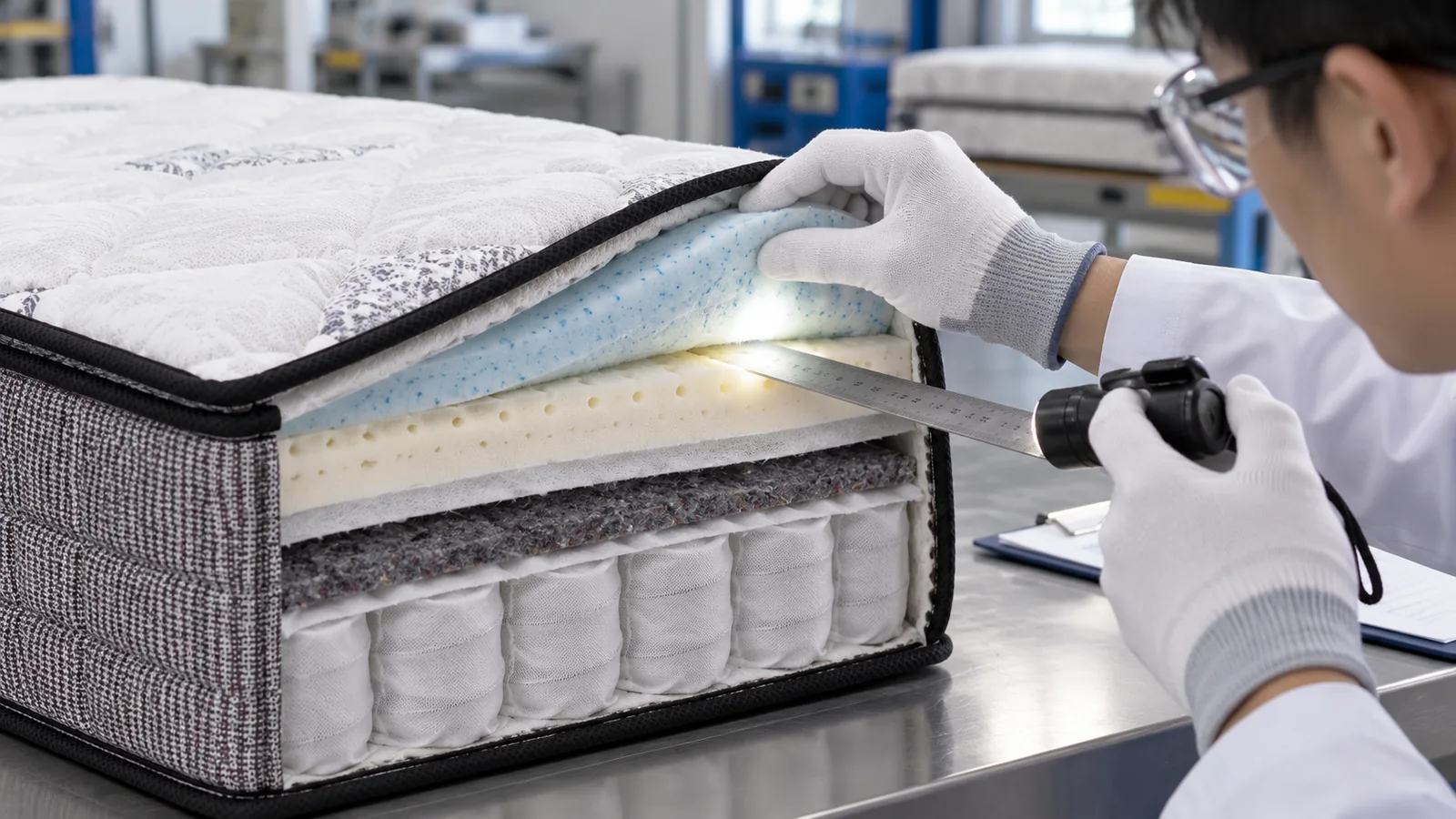
Before the cover is opened, write down the contact being checked and mark an adjacent area to leave intact. The opened spot can then be compared with material that the teardown did not disturb.
How Can Repeat Orders Use the Same Noise Check?
Testing a mattress on one support and installing it on another leaves a gap in the approval. The support is part of the bed’s mechanical behavior even when it comes from another supplier.
Put support conditions into the specification
The purchase document should identify the intended base, center support, foundation, and likely edge use. Pilot units belong on the same kind of support planned for rooms, displays, or user instructions. A requirement for a “silent mattress” offers no test. A practical check names the movement, location, support, and response when a recurring sound is found.
Keep a reference, but review meaningful changes
An approved reference mattress and its notes help with repeat orders. A different pocket fabric can alter friction. Revised edge construction or cover tension can redirect load, while packaging can change how the mattress settles after opening. Such changes deserve review when they can affect the approved behavior.
The quality plan should identify which changes reopen review and who may approve destructive inspection.
Where Can a Buyer Send a Reproducible Noise Record?
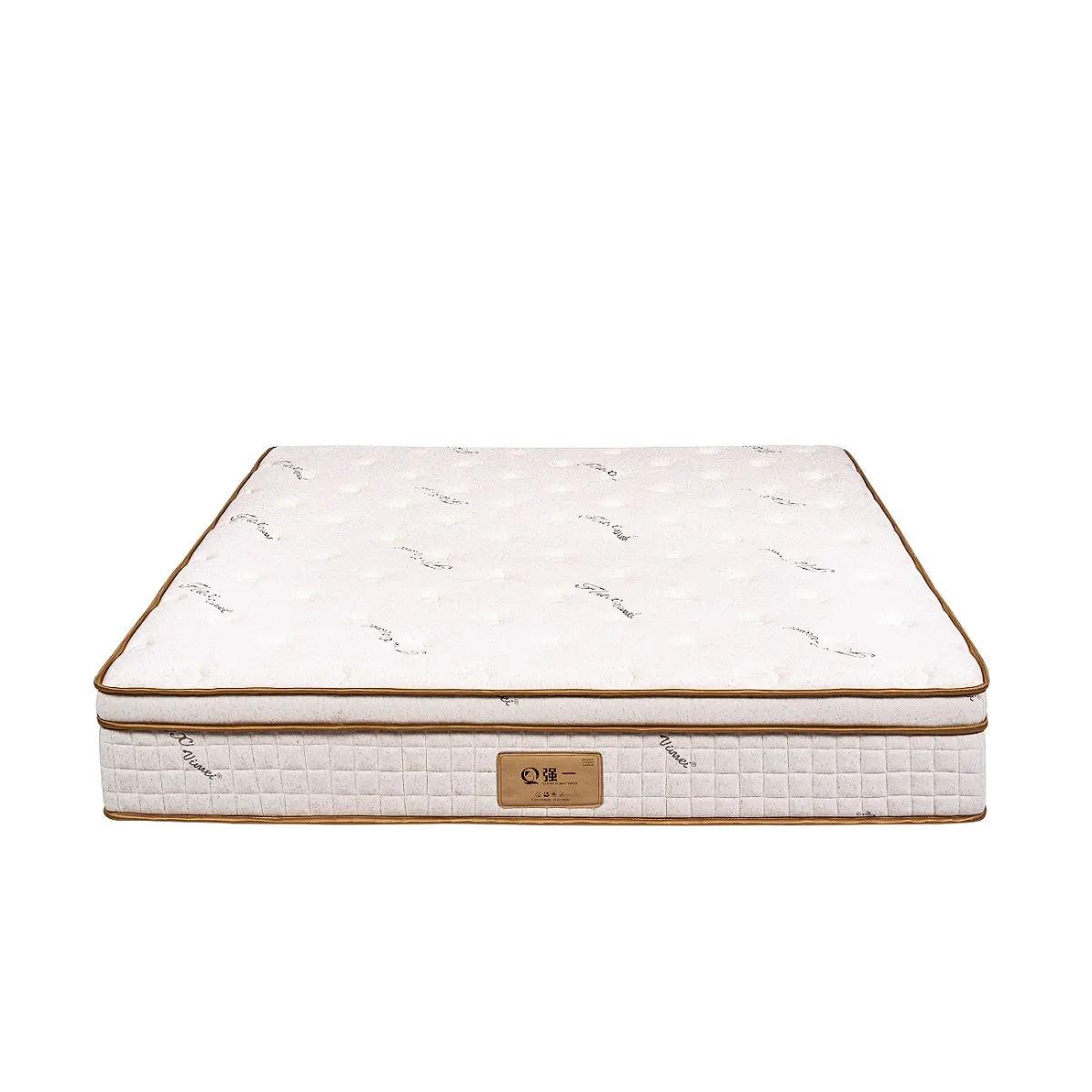
Guangdong Qiangyi Intelligent Manufacturing Technology Co., Ltd. makes foam, pocket-spring, hybrid, hotel, and customized mattresses for OEM and ODM orders. Its service team can start from the recorded base layout, motion, marked zone, and order reference. Another technician can then begin from the same condition.
Conclusion
Noise starts to become evidence when it stays with one component after the other paths are separated. Reproduce the real movement, listen to the empty base, and move the mattress to a suitable comparison support. Rotation plus a related change in feel or shape may narrow the search. Those results determine where to inspect; spring-core damage still requires direct evidence from the marked area.
FAQs
Can a mattress-area squeak come from something outside the spring unit?
Yes. A slat, rail, foundation, headboard, leg, or fabric contact may send sound through the mattress. Test those contacts first; if the noise still follows the marked zone onto a second support, inspect that zone next.
Which comparison should come first?
First repeat the reported movement on the assembled bed and mark the sound location. Then take the mattress away and load the matching location on the base. If the empty base stays silent, put the mattress on a suitable comparison support and repeat the same motion.
Should the Cover Be Opened as Soon as a Squeak Is Heard?
Not immediately. First mark the zone, compare loading with recovery, and check for a change in feel or shape. Opening should have an agreed purpose because it alters the product.
What should a hotel retain when several rooms are involved?
Keep the room and base identification, mattress reference, orientation, time in use, load point, movement, and result of both isolation checks. State how many units were actually examined.