


22nd October 2026
Why Do Mattress Comfort Layers Delaminate? Bonding, Curing, and Repeated-Load Checks
-
 author
“The top feels loose” does not yet describe a failed bond. A cover or quilted panel can move while the comfort stack remains joined. After an interface is exposed, a nearly clean surface, adhesive on both sides, and foam tear need separate interpretations. They are not interchangeable signs of one glue problem.
Is the Movement in the Cover or Between Comfort Layers?
Before cutting, find out what actually shifts under the hand. Pressing harder may enlarge the area and make its first boundary impossible to recover.
Watch the loose area under light pressure
Examine the mattress at rest, then apply light pressure around the border of the loose area. Movement that travels with the cover suggests quilting or top-panel movement; a border that remains in place beneath the textile directs attention into the comfort stack.
Mark that boundary. Take one view of the complete mattress and another of the local area, both with orientation and scale. A close-up alone can make an edge-handling mark appear to be a central service failure.
Limit the opening to the question
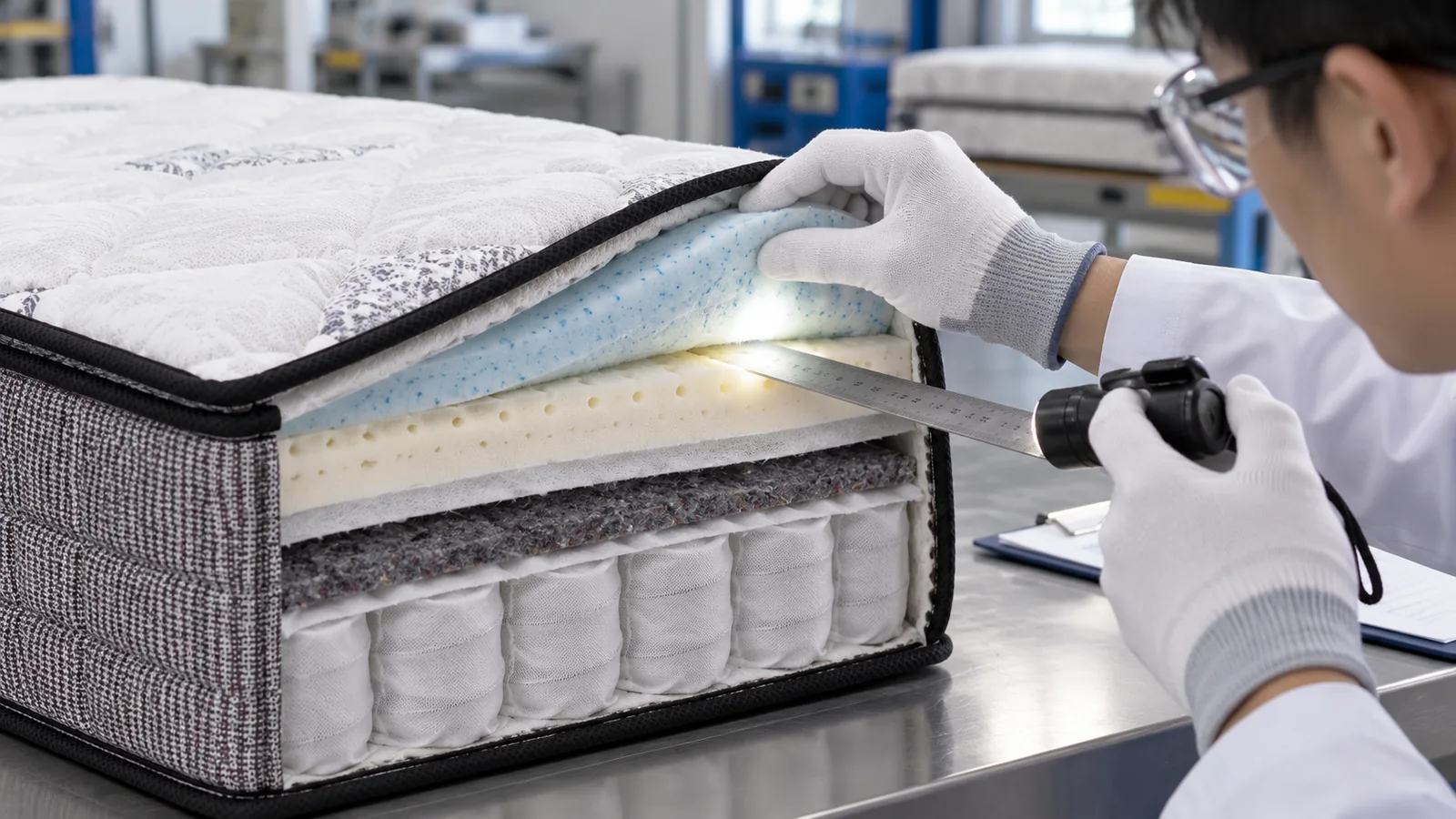
Where opening is warranted, expose only the area needed to view the bond. Photograph each side before cleaning or pulling farther. Beginning at a tear can extend it and leave fresh damage mixed with the original surface.
Keep an intact patch beside the opening. It provides a comparison from the same mattress and process.
What Does the Open Interface Suggest?
The failure face changes which process questions are sensible. It does not, on its own, deliver a final cause.
Look at where the adhesive stayed
Little transfer on one substrate suggests an interface release. Possible checks include wetting, residue, compatibility, coverage, assembly timing, and whether the two surfaces actually met. The surface should direct the inquiry rather than serve as instant proof that the adhesive was unsuitable.
Adhesive on both substrates may mean the split occurred within the adhesive layer. Check its condition, applied coat, available strength when handling began, and the loads present at that time. Surface preparation and bonding conditions must come from the current instructions for the actual adhesive and substrates. Numbers from another product cannot substitute for them.
Interpret foam tear locally
Foam fragments on the opposite layer show a local tear created during separation. The result belongs to that position and pull, not every interface in the mattress. A change from clean release to foam tear across the width may reflect coverage, contact over a contour, or the way the sample was pulled open.
Open a second position only if it will resolve a specific comparison. Keep the pull direction similar and preserve an undamaged area, rather than allowing a torn edge to represent the whole surface.
Why Can Separation Become Visible After Assembly?
A mattress may appear even when assembly ends, yet one area may lack complete contact or enough early strength for the handling that follows.
Match wetting and pressure to the actual surfaces
Open-cell foam and a denser skin present different bonding faces. Dust, residue, moisture, and fabric backing change them again, so the materials on both sides should be identified rather than described only as foam and fabric.
A heavy coat does not repair a missed patch. Too much adhesive may change drying or activation; a wrinkle may keep two coated areas apart. Pressure should close the interface without leaving the foam crushed after the load is removed.
Allow the bond to develop before it is worked
The applicable process instruction sets the joining interval. Trimming, folding, rolling, compression, and packing then load the bond in different ways. Beginning those steps before sufficient strength develops can disturb an interface that looked orderly at assembly.
Handling time must be taken from the system actually in use: its adhesive, two substrates, coat, environment, and production method. A delay copied from another construction has no demonstrated relation to this one.

How Should Use Loading and Packaging Be Evaluated?
A sleeper’s repeated loading and a compressed-pack sequence bend the stack differently. A result from either path should be interpreted within that path, not carried across automatically.
Load a mattress made by the intended process
Use production materials assembled by the intended process. Support and load the relevant area in a way that represents service. A sharp artificial force may simply tear foam. Inspect the marked positions before and after for a raised edge, sliding layer, wrinkle, changed feel, or new difference in height.
Track packing and recovery separately
Rolling and folding bend the stack while the package holds it constrained. Storage and transport continue that condition; opening then releases it. Note the packing arrangement and the point in recovery when the loose area appeared.
Retain controlled compression information when the process provides it. If no value was recorded, state that limitation without creating one after the event. For symptoms first seen after unpacking, compare an uncompressed reference and consider the strength the bond had developed before packing.
What Should the RFQ Say About Bonding Quality?
A general promise of “no glue problem” gives production and the buyer no shared way to describe a surface. The construction should instead be treated as a set of named interfaces.
Make each bond understandable
For every intended bond, identify the material on each side and the adhesive system and process revision between them. Review should cover the surface condition, coat, assembly timing, contact, conditioning, and early handling. Use distinct terms for release at a substrate, splitting within adhesive, foam tear, and a mixed surface. Otherwise two teams may attach different meanings to “delamination.”
An approved mattress, layer map, and untouched comparison material can support later review. A corner pulled by hand cannot represent the whole bond: grip, direction, and local foam behavior have too much influence.
Review changes that can alter the interface
The useful trigger is a change capable of altering contact or strength development. A different substrate, adhesive, application setting, conditioning step, handling sequence, or package can have that physical effect. The quality plan should identify who assesses the change and who may authorize opening a complaint sample.
Where Can a Buyer Bring a Well-Defined Layer Question?
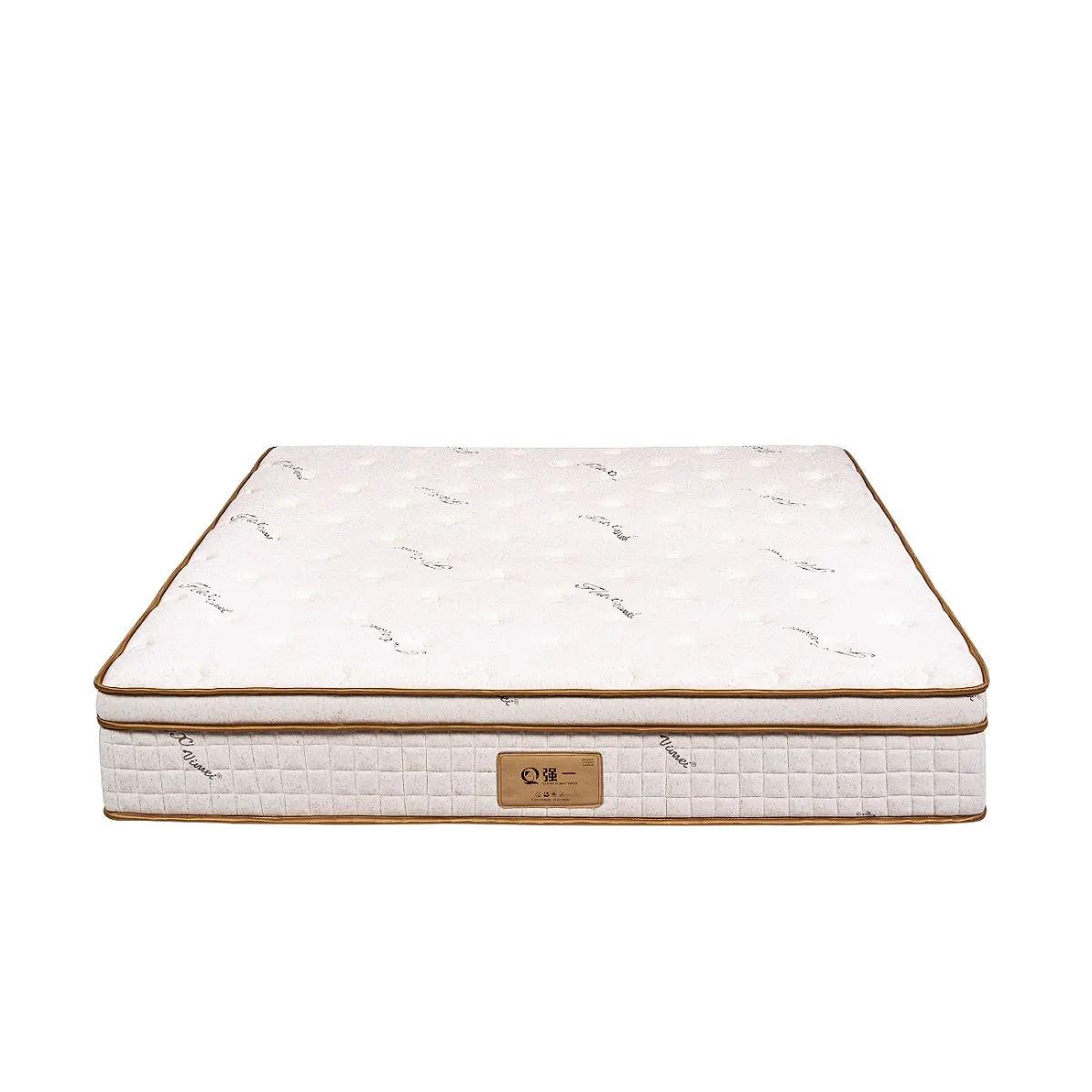
Guangdong Qiangyi Intelligent Manufacturing Technology Co., Ltd. makes foam, pocket-spring, hybrid, hotel, and customized mattresses for OEM and ODM projects. Its service team can begin with the layer identities, packing condition, symptom location, and proposed inspection, keeping the discussion on the actual interface rather than a general glue-failure label.
Conclusion
Start with the surfaces that moved. Preserve both faces during any opening and compare them with untouched material. The pattern may point toward wetting, contact, early handling, use loading, or package recovery. Use it to select the next check, not as an explanation for every loose area.
FAQs
Can a loose cover or foam tear occur while the bond remains intact?
Yes. The cover may move independently, and foam may tear locally while adhesive stays attached. Identify the two moving surfaces before assigning a failure mode.
Can one hand peel approve or reject the bond?
No. Grip, direction, location, and local foam behavior affect the result. Compare more than one position and retain untouched material.
Why is packaging recovery checked separately?
Compression, rolling, opening, and recovery constrain the stack differently from normal surface use. One test path cannot answer the other.
When should a process change reopen review?
Reopen review when a change could alter wetting, contact, strength development, or early loading at the interface. The physical effect matters more than the name of the changed item.