


3rd July 2026
How Mattress Manufacturers Test Durability: Inside a 30,000-Cycle Compression Test
-
 author

Evaluating the durability of mattresses is an important criterion to judge a mattress’ comfort level and durability over time. While a well-made mattress can support you for nearly a decade, before it starts to break down, it needs to be put through various tests before it’s put on the market. Without these tests, mattresses might sag prematurely or lose their firmness, harming a manufacturer’s reputation. To test mattresses, producers conduct a number of mechanical tests within the required framework. The most well-known test is the 30,000 times compression test. In this test, a mattress is compressed 30,000 times to simulate the years of night-time use of a bed. These durability tests are a mix of engineering and testing in order to guarantee customers comfort assurance.
What Is a 30,000-Cycle Compression Test and Why Does It Matter?
Before we get into the nitty gritty of how we test mattresses for quality it might help to explain how we simulate the repetitive loads that a mattress endures during normal use.
The Concept Behind Repetitive Load Testing
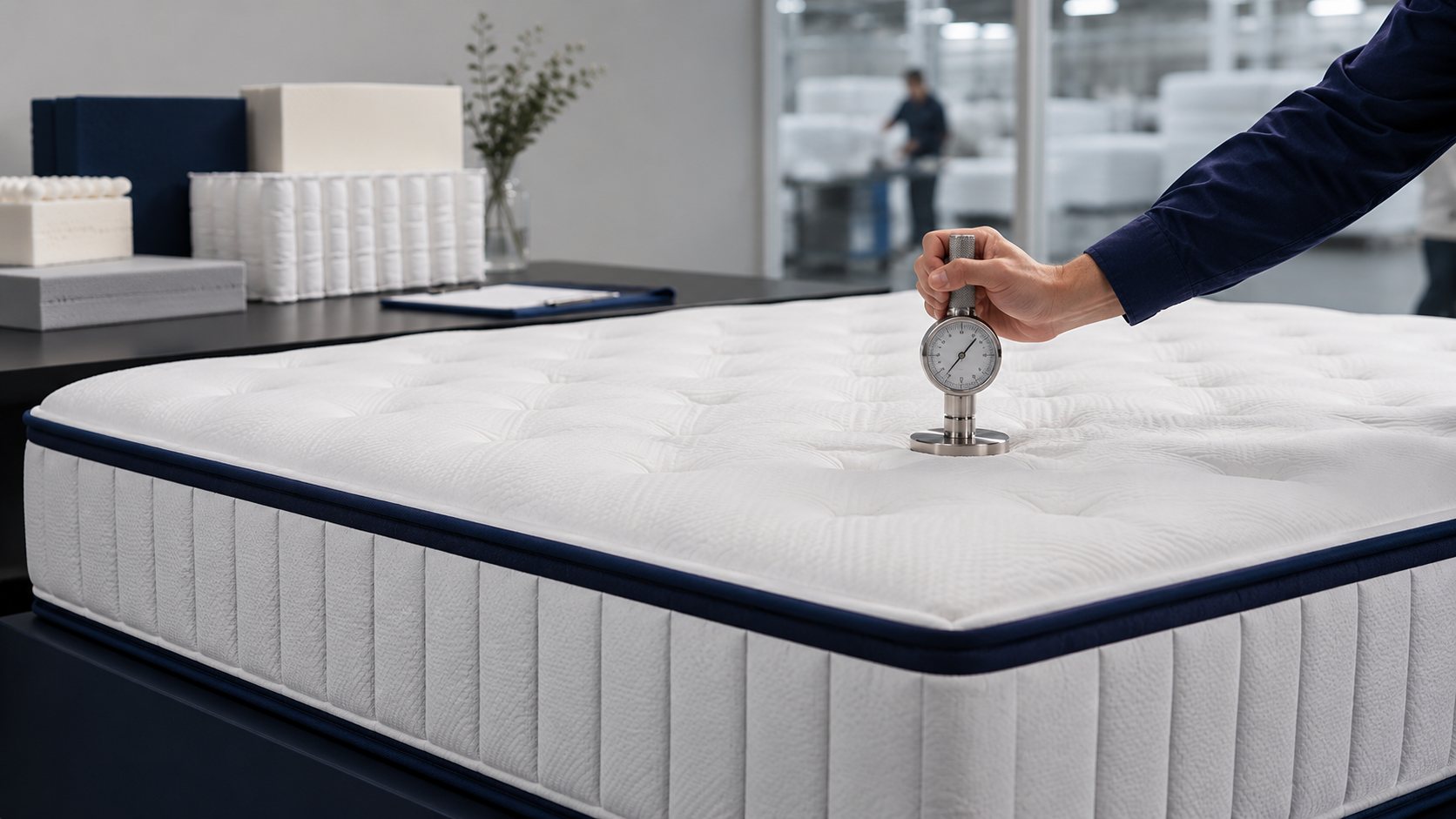
The 30,000-cycle compression test is simulated in the lab to simulate years of continuous use. The mechanical roller or platen is pressed into the surface of the mattress to simulate activities such as turning, sitting and getting into and out of bed. Each cycle of compression includes similar forces to those found in normal sleep. After the test, pre- and post-test measurements of firmness and surface deformation are compared to assess material fatigue and predict long-term performance. This type of testing is equivalent to about 8-10 years of normal use.
Industry Standards and Testing Protocols
Our durability tests are based on the international standards for foam, ISO 3385, and for mattress systems, ASTM F1566. These tests have predetermined parameters for items such as the test load application rate, the size and type of the test roller, and the measurement intervals. After completing 30,000 cycles the various parameters of the mattress are measured for height loss, indentation recovery as a percentage, and residual deformation in several test zones. The results from these tests are compared against the specifications for that mattress and against the internal quality specifications for that mattress or against the specifications for that mattress to meet an industry certification.
How Do Manufacturers Measure Mattress Durability During Testing?
During testing of materials, manufacturers use the latest instrumentation to monitor all test parameters.
Key Performance Indicators in Durability Assessment
The durability of a mattress can be quantified through several key indicators, such as the indentation loss percentage of the surface, the foam rebound rate, the coil fatigue resistance, and the edge support stability. In order to evaluate the internal stress distribution of a mattress over time, Force-displacement curves can be derived from sensors that are embedded in the mattress. These curves can indicate potential structural fatigue or uneven wear in the mattress early on, and can also highlight potential issues with the comfort consistency of a mattress. They can be plotted over thousands of test cycles to create a comprehensive and quantitative evaluation of the mattress.
Role of Material Composition in Test Outcomes
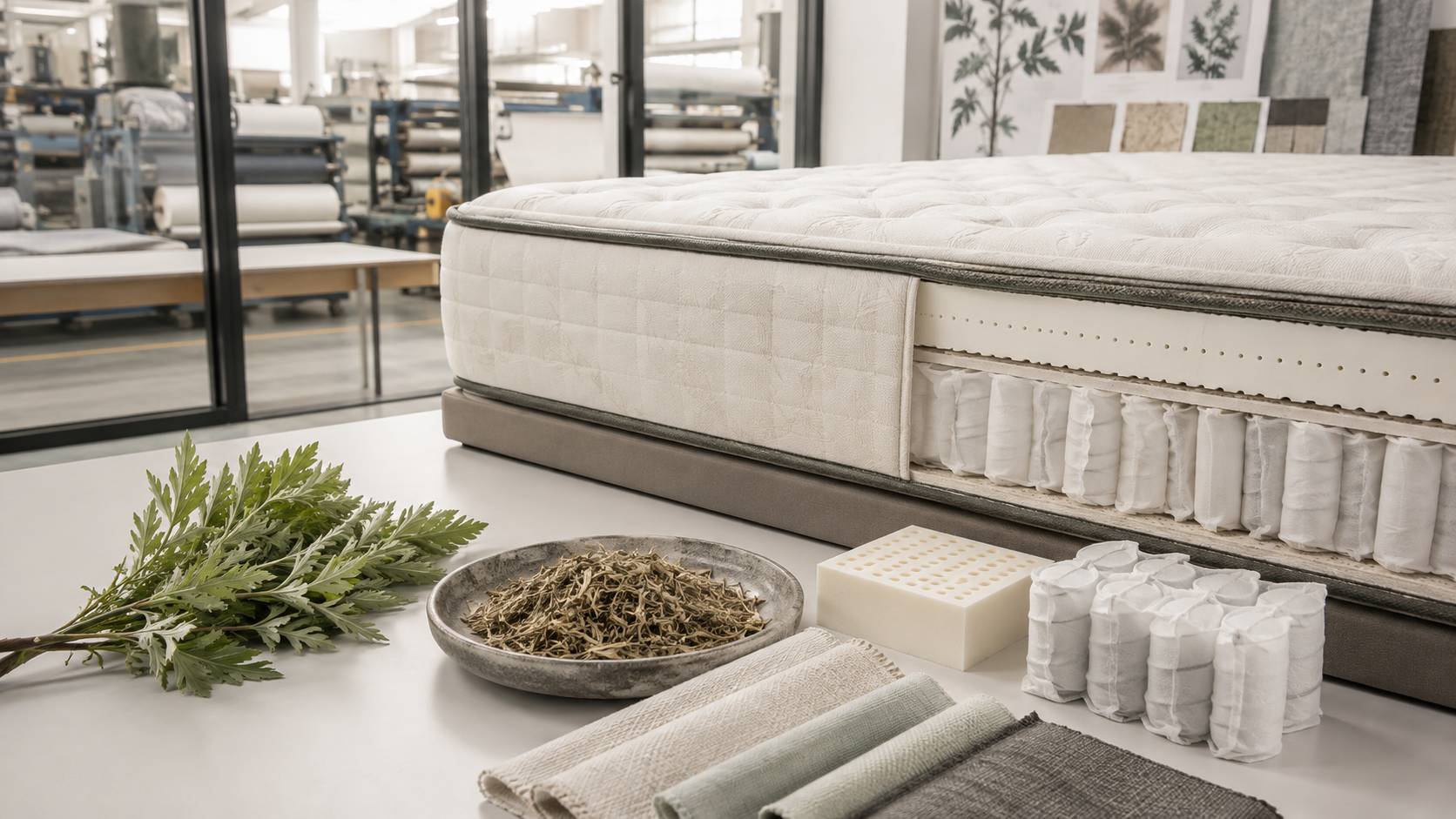
The selection of the test materials has a significant effect on the test results. High-density polyurethane foams are more resistant to permanent deformation than low-density foams. This is because the high-density foams have smaller, closed cells that distribute the applied pressure more consistently than the open cells found in lower density foams. Also, Hybrid models that combine pocketed coils with layers of latex or memory foams tend to perform better in repetitive compression tests than models made from single materials. This is because the elastic material is able to work in conjunction with the support provided by the coils. Studies have also shown that an increase in humidity or temperature can cause deterioration to increase by as much as 15%. This emphasizes the importance of tests being conducted in a climate-controlled room.
What Equipment Is Used in Mattress Durability Testing?
To test and measure the different properties of mattresses, mattress manufacturers use specialized machinery found in mattress testing laboratories. This equipment is designed to deliver consistent and precise results.
Description of Compression Machines and Rollers
Modern test rigs are equipped with test stands with servo-controlled actuators for consistent loads on up to several test zones at the same time. The rollers have contour surfaces with the same proportions as the human body and its movements. This means that they roll back and forth like a person turning in bed, and they put a lot of pressure on sitting areas. Some test stands even have multi-axis motion for a more thorough fatigue test, for example by simulating different sleeping positions.
Calibration and Maintenance Practices for Accuracy
The accuracy of the results greatly depends on the accuracy of the calibration procedures. The load cells are checked with certified test weights in order to ensure the same force is applied as in the test. The lubrication systems are designed in order to keep the friction within the actuators as constant as possible. The control software is updated regularly in order to keep the software in synchronization with the mechanical parts and the data acquisition modules. In addition to this, the normal wear and tear on the systems is kept to a minimum in order to keep down time to a minimum and to be able to reproduce results between batches.
How Do Test Results Influence Product Design and Manufacturing Decisions?
Data from long-cycle tests is used directly by engineers to develop design optimization strategies.
Translating Data Into Design Improvements
Your design may require some fine tuning after you see the test data show up premature sagging or localized deformation of the foam. Adjust the density gradient of the foam or the coil gauge in certain layers. Test iteratively until you get the layer stacking just right to achieve optimal pressure distribution. All the evidence from testing is then used to fine tune the design to extend the product life while keeping comfort and breathability under control.
Cost Implications and Return on Investment (ROI) Considerations
Comprehensive durability testing may cost up to 10% to 20% more initially; however, this is quickly recouped as warranty claims are reduced dramatically and the return on investment for manufacturers and retailers is improved. By testing mechanical endurance on materials to ensure maximum durability, a range of products can have their lifespan extended by several years, all while bolstering the confidence that consumers have in a brand’s reliability.
What Are Common Challenges in Conducting Long-Cycle Durability Tests?
Even with the latest technological developments, there are a number of operational constraints that hinder the realization of efficient and realistic test conditions.
Balancing Speed With Realism in Accelerated Testing
The objective of accelerated fatigue testing is to emulate years of end user activity in a matter of days. However, by increasing the cycle rate of testing, there is potential for excessive heat to be generated within the foam layers of the mattress. This excess heat can cause test results to be skewed from true end user-based degradation. It is necessary for testing engineers to establish appropriate speed-to-load ratios in order to replicate thermal effects experienced by a user in normal sleeping conditions while enabling reasonable test durations.
Managing Variability Across Different Mattress Types
All mattress constructions react in different ways to the same amount of pressure. A mattress made of foam only will compress much more than a hybrid mattress or an innerspring mattress, because they are using different ways of energy absorption. By standardizing parameters like platen surface of the testing machine or the weight of the testing roller, we can ensure that within a product line all different constructions are tested on a similar basis. However, due to the natural differences in materials used for different constructions, it is impossible to test them on exact same basis.
How Do Leading Manufacturers Maintain Consistent Quality Across Production Lines?
Consistency between laboratory evaluations and actual manufacturing operation is ensured by data-driven integration.
Integration of Quality Control Systems With Durability Testing Data
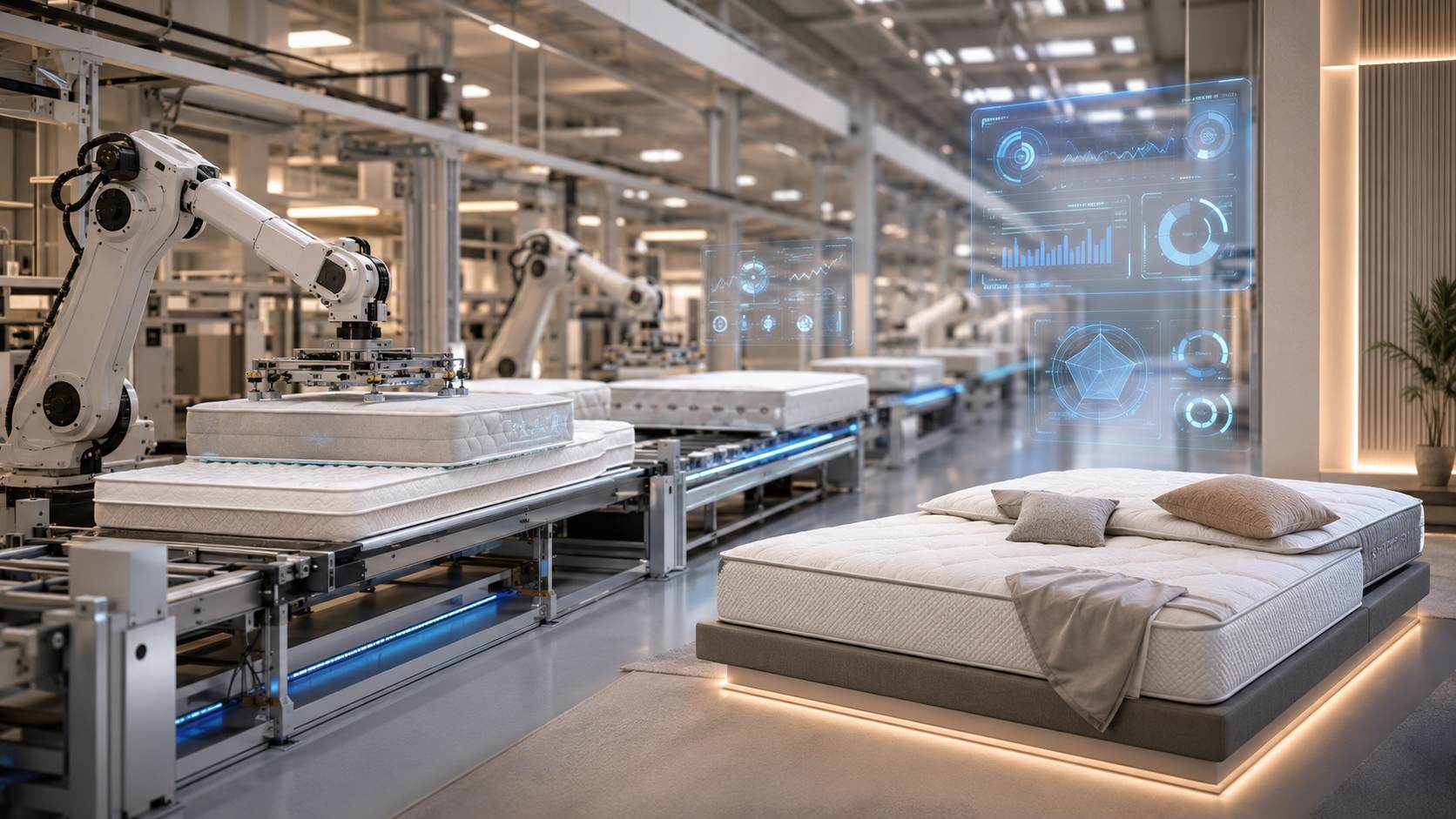
Automated data collection from durability benches feeds directly into centralized quality management databases where statistical process control (SPC) algorithms monitor deviations from established norms. When anomalies appear—such as unexpected firmness drift—production teams can intervene immediately before defective units reach consumers.
Continuous Improvement Through Feedback Loops
All processes can be further refined by correlating data on field performance with the data obtained in the lab. A trend of sagging or complaints from customers about loss of firmness can be linked back to production in order to make changes to the raw materials and/or the assembly process for future production runs based on retailer’s feedback.
Who Is Behind Reliable Mattress Manufacturing Technology?
Guangdong Qiangyi Intelligent Manufacturing Technology Co., Ltd. of China is a leading mattress manufacturer for the global market and a reliable partner in the field of mattress testing and inspection. The test equipment for mattresses supplied by the company, which is based in China’s manufacturing heartland, is extremely precise. This is achieved thanks to the fully automated testers for compressing mattress components, which test according to ISO and simulate the human interaction with a mattress in a short space of time. In addition to the corresponding test equipment, the company also offers support with the calibration of existing systems, training for staff and preventive maintenance of the respective systems. This allows the corresponding validation during the R&D phase to be transferred to the quality during series production in a structured and cost-effective manner.
Conclusion
The mattress durability test, specifically the 30,000-cycle compression test, provides the crucial criteria to assess the long-term reliability of a mattress rather than merely checking off a few regulatory requirements. To determine the precise lifespan of a mattress, test methods are standardized and combined with high-precision, servo-controlled test equipment to preclude premature material failure and resulting excessive warranty claims. On the basis of these results, engineers can develop the most suitable design in terms of materials and construction instead of relying on tentative assumptions regarding human behavior. As industry becomes more transparent regarding its quality assurance, test methods for durability provide a link between laboratory test results and worldwide sleeping comfort.
FAQs
1. How long is a typical mattress compression test for 30,000 cycles?
The test time for such a test typically spans a few days depending on the test machine’s cycle speed, which can be set as required. The faster the test, the less the test time but then there is a greater challenge in managing the heat which can affect the test results.
2. Are there specific standards for testing mattress durability?
Yes, there are ISO 3385 (for polyurethane foam) and ASTM F1566 (for full mattress test). These are international test methods widely used around the world.
3. Can small manufacturers conduct durability testing and gather results using available equipment without having to purchase a large number of expensive pieces of testing equipment?
Yes. Contract testing is available from many third-party testing laboratories on a per sample analysis basis at competitive prices. The samples can be shipped to the test laboratory by the manufacturer.
4. Apart from the quality of the materials, what factors most influence how long a mattress lasts?
Besides the quality of the materials, a mattress’s lifespan is mainly influenced by environmental conditions, the distribution of the users’ body weight, the mattress’s foundation, and the way the mattress is treated and maintained.
5. How do consumers benefit from a manufacturer carrying out tests?
By the manufacturer carrying out durability tests the consumer can be sure that the articles offered for sale have a certain level of performance. The consumer can be protected from complaints that occur prematurely, for example sagging, and reach the desired level of comfort in the long term.