


21st August 2026
Xinjiang Cotton vs Conventional Cotton: What Mattress Buyers Should Know About Cotton Quality
-
 author
When comparing the qualities of cotton textiles for ticking and quilted cotton, the discussion often begins with where the cotton was grown. Xinjiang cotton is associated with a particular set of qualities due to its growing location, but other varieties typically come from diverse agricultural areas. However, the way the cotton is spun into yarn, the fabric is woven or knitted, finished, and produced into a product dictates its qualities far more. When buying cotton products, it is necessary to consider the full range of textile production features, not just the place and source of raw materials.
Why Does Cotton Origin Matter When Selecting Mattress Materials?
Cotton origin can affect the properties of the raw material, but when it comes to such products as mattresses, buyers should be aware that origin influences the characteristics of the textile products made from it. In other words, there are more stages before crude cotton becomes a part of any textile product, be it ticking, knitting or quilted cotton.
Cotton Growing Conditions Can Influence Fiber Characteristics
Different growing regions may have a different fiber quality of cotton due to specific growing conditions, agricultural practices, cultivars, and processing techniques. According to research on the quality of Xinjiang’s cotton, fiber characteristics differ depending on production regions due to environmental factors and agricultural practices.
For mattress applications, these differences may influence:
- Fiber length
- Fiber strength
- Uniformity
- Spinning performance
- Yarn consistency
However, the quality of raw cotton is not directly translated into the quality of the fabric of the mattress. The manufacturer of the finished product needs to control the processes of spinning, knitting, weaving, dyeing, and finishing.
A longer and finer cotton thread can be an advantage in the textile processing. However, the quality of the material depends not only on the raw material but also on the technology of processing.
Mattress Buyers Need to Evaluate Finished Fabric Instead of Cotton Labels
A common mistake in procurement is comparing cotton only through labels such as “Xinjiang cotton” or “100% cotton.” These descriptions provide limited information about actual mattress performance.
The same cotton content can produce different results depending on:
- Yarn count
- Fabric weight
- Knitting structure
- Finishing treatment
- Blending ratio
- Production control
For mattress ticking, the fabric must work together with quilting layers, foam, latex, or spring structures. A fabric that feels soft as a sample may behave differently after being stitched and compressed into a complete mattress.
The more useful question is not simply “Which cotton is better?” but “Which cotton fabric specification fits this mattress design?”
How Does Cotton Quality Affect Mattress Ticking Performance?
Cotton used in mattresses has different requirements compared with cotton used for ordinary clothing. A mattress cover must maintain appearance, comfort, and structural stability after long-term contact, compression, and repeated handling.
Fiber Quality Influences Fabric Strength and Surface Feel
Cotton fiber characteristics affect how the yarn is produced and how the final fabric feels. Better-controlled fiber properties can support more stable yarn formation and reduce variation during fabric production.
For mattress buyers, important points include:
- Surface smoothness
- Fabric durability
- Moisture absorption
- Breathability
- Resistance to pilling
- Color consistency
Cotton is often selected for mattress ticking because it provides a natural hand feel and good moisture management. However, comfort is not determined by cotton alone. The fabric construction and finishing process also influence the final sleeping surface.
For example, a knitted cotton mattress cover may provide more flexibility, while a woven structure may offer different dimensional stability. The suitable option depends on mattress structure and target market requirements.
Fabric Construction Determines How Cotton Performs Inside a Mattress
The manufacturing process after cotton selection plays a major role in final performance.
A mattress ticking supplier may adjust fabric characteristics through:
- Knitting density
- Yarn selection
- Fabric thickness
- Surface treatment
- Fiber blending
These choices affect how the cover reacts during quilting and assembly.
During mattress production, a fabric that stretches too easily may create challenges during quilting. A fabric with insufficient flexibility may affect surface comfort. Therefore, cotton quality must be evaluated together with the manufacturing process.
Is Xinjiang Cotton Always Better Than Conventional Cotton for Mattress Production?
Xinjiang cotton can have strong fiber characteristics, but it does not automatically mean every mattress fabric made from it will outperform conventional cotton. The final result depends on textile processing, fabric engineering, and quality control.
Raw Material Quality and Fabric Processing Must Be Considered Together
A mattress manufacturer does not directly place raw cotton into a finished product. Cotton passes through multiple processing stages before becoming a usable cover material.
During these stages, manufacturers need to control:
- Yarn consistency
- Fabric structure
- Finishing quality
- Shrinkage behavior
- Production stability
A high-quality raw material can lose its advantages if later processing is inconsistent. Similarly, conventional cotton with suitable processing may produce a mattress fabric that meets the required application.
For procurement teams, this means fabric samples and technical specifications are more valuable than origin descriptions alone.
Different Mattress Applications Require Different Cotton Solutions
The “best” cotton choice depends on the mattress category.
For example:
- A premium residential mattress may focus on softness and natural touch.
- A hotel mattress may prioritize durability and easy maintenance.
- A commercial mattress project may require consistent supply and cost control.
In these situations, cotton selection should match the product position.
A mattress cover is only one part of the complete sleeping system. The interaction between ticking, comfort layers, support systems, and packaging requirements should all be considered during product development.
What Should Mattress Buyers Check Before Purchasing Cotton Fabric?
Before confirming a mattress fabric order, buyers should review more than material names. A clear specification reduces misunderstandings between textile suppliers and mattress manufacturers.
Fabric Specifications Provide More Reliable Evaluation Criteria
Professional buyers usually review technical information such as:
- Fiber composition
- Fabric weight
- Fabric construction
- Width specification
- Color standard
- Finishing method
- Shrinkage performance
These details facilitate easier comparison between suppliers.
For instance, two cotton mattress tickings may vary in weight, stretch, and surface finish, which could impact production yields and customer satisfaction.
Moreover, sample approval is crucial, as the approved sample represents the finalized design that will be produced.
Quality Inspection Helps Maintain Consistency Between Orders
For mattress brands and distributors, repeat orders are often more important than a single shipment. A fabric change between batches can affect product appearance and customer perception.
Quality control may include checking:
- Fabric appearance
- Color consistency
- Surface defects
- Dimensional stability
- Compatibility with quilting processes
A consistent fabric supply allows mattress manufacturers to maintain stable product lines and reduce adjustment work during production.
How Can Buyers Choose a Mattress Supplier With Better Cotton Material Control?
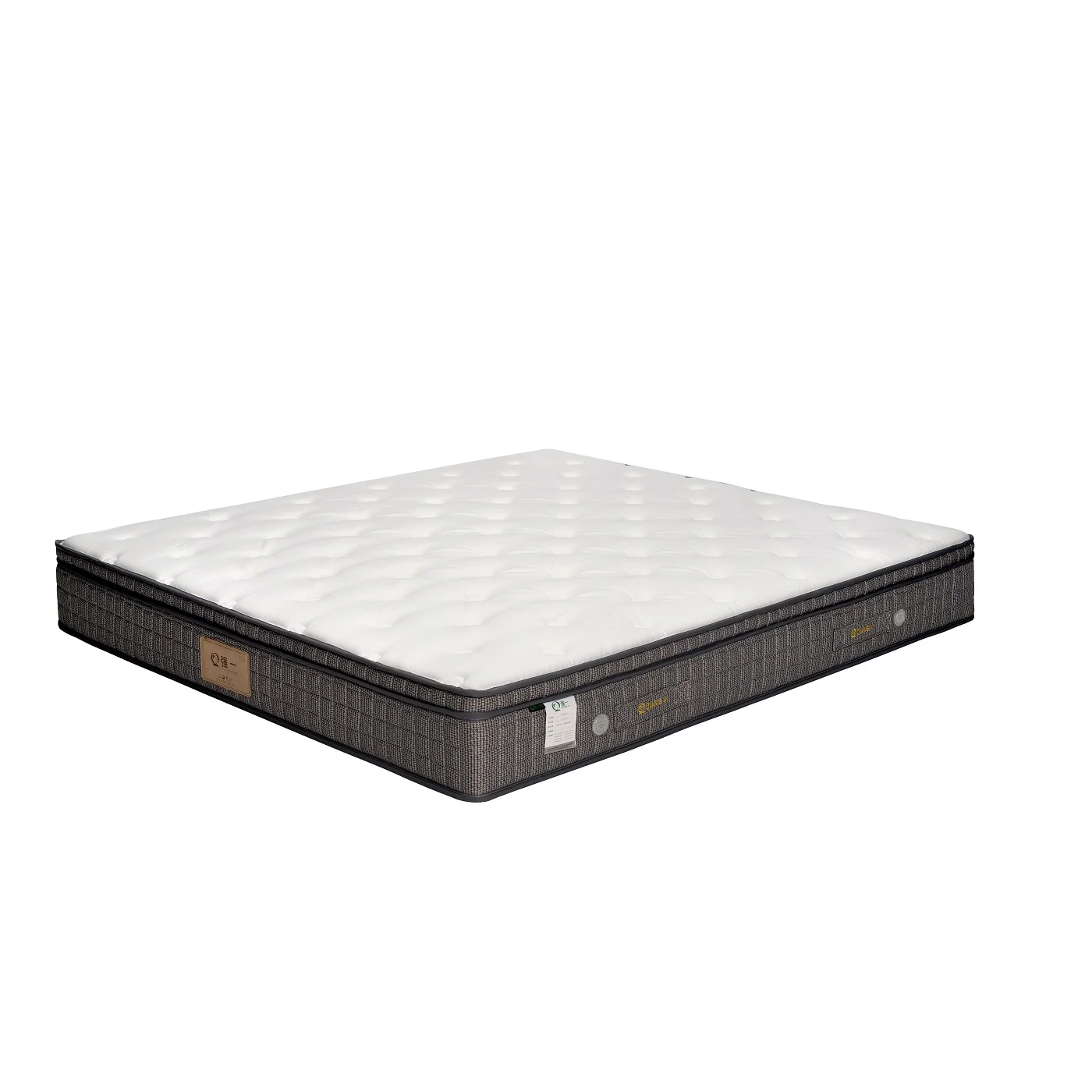
Cotton selection is closely connected with mattress manufacturing capability. A supplier needs to understand how fabric choices affect the complete mattress rather than treating ticking as an isolated component.
Material Knowledge Supports Better Mattress Development
When developing a mattress product, buyers often need support with:
- Cover material selection
- Comfort layer matching
- Product positioning
- Customized specifications
- Production planning
A supplier that has experience with the process of mattress manufacturing will be able to advise on the characteristics of cotton to use for a specific design.
For instance, the fabric for a cotton ticking may differ depending on the type of latex layers and how they are placed on the model. Other elements such as the surface design and inside structure should also be taken into consideration.
Supplier Communication Reduces Material Selection Risks
Many material issues appear because expectations are unclear before production begins.
Effective supplier communication should cover:
- Fabric specifications
- Sample approval
- Production requirements
- Quality inspection standards
- Delivery expectations
A lower-cost material may create additional production challenges if it does not match the mattress design. Evaluating material suitability before ordering helps avoid unnecessary changes later.
Why Choose Guangdong Qiangyi Intelligent Manufacturing Technology Co., Ltd. for Cotton-Based Mattress Solutions?
Guangdong Qiangyi Intelligent Manufacturing Technology Co., Ltd. engages in the production of mattresses that offer customized solutions to the company’s international clients. The firm specializes in providing mattress products with varying cover designs, comfort systems, and specifications. The company offers expertise in mattress manufacturing to clients seeking to identify the most appropriate materials, comfort options, and other attributes for their products. Qiangyi facilitates the development of its clients’ communication strategies, customizes products based on specific requirements, and collaborates with them to produce mattresses for various geographic locations. It accomplishes this by focusing on the combination of elements rather than just an individual part to ensure that the entire product’s structure is suitable for the intended purpose.
Conclusion
Xinjiang and ordinary cotton are different, but the fact that they came from different sources is not of great importance in deciding which is better. The characteristics of fibers, the structure of the fabric, processing technology, and production uniformity are more important to the mattress buyer. The quality of cotton ticking is related to the characteristics of the overall mattress system in which it is used. Therefore, it is necessary to study product specifications and sample analysis data to make reasonable purchasing decisions and reduce the risk of material procurement.
FAQs
1. Is Xinjiang cotton suitable for mattress ticking?
Yes, Xinjiang cotton can be used for mattress fabrics, but suitability depends on fiber properties, textile processing, fabric construction, and the requirements of the final mattress design.
2. Does cotton origin determine mattress quality?
No. Cotton origin is only one factor. Mattress fabric quality also depends on yarn processing, finishing methods, construction, durability, and manufacturing consistency.
3. What cotton fabric factors should mattress buyers compare?
Buyers should compare fiber composition, fabric weight, construction, breathability, surface feel, shrinkage performance, durability, and compatibility with mattress production processes.
4. Why should mattress manufacturers test cotton fabric samples?
Fabric samples allow manufacturers to evaluate appearance, quilting performance, comfort, and production compatibility before large-scale manufacturing begins.
5. Can cotton mattress covers use blended fabrics?
Yes. Cotton blends can provide different advantages such as improved stability, durability, stretch control, or cost balance depending on the mattress application and market requirements.