


8th October 2026
How to Reduce Lead-Time Risk When Working With an OEM Mattress Manufacturer
-
 author

Lead-time problems in mattress sourcing rarely begin on the production line. They often start earlier, when a project enters quotation with an unfinished construction, an unapproved cover, uncertain packaging, or a launch date that assumes every step will happen without revision. For mattress brands, importers, and hospitality buyers, the safest way to manage delivery is to separate the project into approval, material, production, inspection, and shipping stages. A useful timeline should show what must be confirmed before the next stage begins, who owns each decision, and what happens if a material or design changes. That makes lead time something the buyer can actively manage rather than a single number printed on a quotation.
Where Does Lead-Time Risk Usually Start in an OEM Mattress Project?
The production date is only one part of an OEM program. Before a mattress can enter stable manufacturing, the factory normally needs a confirmed construction, material requirements, dimensions, branding details, packing method, and an approved sample. If those items remain open, a production slot may exist on paper while the project itself is not ready.
An approved concept is not the same as a production-ready specification
A buyer may approve the overall feel of a sample but still need to confirm the ticking, quilting pattern, label position, carton artwork, or final layer thickness. Any one of these can hold up purchasing or final assembly.
For that reason, buyers should treat the approved sample and the written build sheet as a pair. The sample shows the intended result; the build sheet defines what the factory is expected to repeat.
Custom materials can create waiting time before assembly begins
Mattress projects often combine several purchased components, including fabric, foam, spring units, non-woven materials, labels, cartons, and accessories. Standard materials may be readily available, while a custom fabric color, printed label, special carton, or unusual layer can require a separate purchasing cycle.
A realistic schedule should identify these long-lead items before the order is released. Otherwise, production may appear to be underway while the factory is still waiting for one component.
How Can Buyers Build a More Realistic Mattress Production Timeline?
A useful timeline is built around decisions and dependencies, not just a target shipping date. The buyer and manufacturer should know what must happen before material purchasing, when mass production can start, and how much time is reserved for inspection and packing.
Set a clear specification freeze date
A specification freeze is the point after which the approved mattress structure, cover, size, labels, packaging, and other commercial details should not change without a schedule review.
This matters because a late change may affect several departments at once. Switching a foam layer can require new material purchasing. Changing the cover may affect quilting. Revising the carton can delay packing even when the mattresses themselves are finished.
Keep inspection and packing inside the schedule
Buyers sometimes plan around the expected completion of mattress assembly and leave too little time for final checks. That can create pressure to inspect, compress, label, and load too quickly.
The timeline should include time for finished-product inspection, packing approval, carton and label checks, compression recovery verification when relevant, and correction of any issues found before shipment.

What Changes Are Most Likely to Push an Order Off Schedule?
Not every revision causes the same disruption. Buyers can reduce uncertainty by separating minor document corrections from changes that affect the physical mattress.
Material substitutions need written review
If a specified foam, fabric, spring component, or other layer becomes unavailable, the replacement should not be treated as automatically equivalent. A substitute can change firmness, recovery, breathability, appearance, thickness, or the way several layers work together.
The manufacturer should explain the proposed change and its timing impact before using it. If another sample or test is needed, that time belongs in the revised schedule.
Packaging revisions often arrive late and still affect delivery
Carton graphics, care labels, barcodes, inserts, and shipping marks are easy to postpone because they do not change the sleeping surface. In practice, they can become the last unfinished part of the order.
Private-label buyers should therefore approve packaging files early enough for printing and checking. Waiting until mattresses are nearly finished turns packaging into a preventable bottleneck.
How Should Buyers Plan Repeat Orders and Seasonal Mattress Programs?
Repeat orders can move faster than new developments, but only when the previous specification is controlled. If materials, drawings, labels, and sample references are scattered across email threads, the factory may need to reconfirm decisions that should already be settled.
Keep one approved reference for repeat production
A repeat-order file should identify the approved construction, material specifications, dimensions, firmness basis, cover and quilting details, packaging, labels, and any accepted tolerances. The manufacturer should also know which changes require buyer approval.
Work backward from seasonal launch dates
For a promotion, hotel opening, retail reset, or peak selling season, the useful deadline is not the date the factory finishes production. The product still needs inspection, packing, export handling, transit, customs clearance, and local distribution.
Buyers should work backward from the required warehouse or project date and place the manufacturing window inside that larger logistics plan. A factory-ready date is only one milestone.
What Should Buyers Confirm Before Accepting a Delivery Commitment?
A delivery promise is more useful when the buyer can see what it depends on. Before confirming an order, procurement teams should define the starting point, key milestones, and conditions that could move the schedule.
Ask for milestone dates, not only one lead-time number
A simple project plan can include the following checkpoints:
| Project Stage | What Should Be Confirmed |
|---|---|
| Specification approval | Construction, size, firmness, cover, labels |
| Material readiness | Key components available or ordered |
| Production start | Approved order released to manufacturing |
| Inspection | Finished-product and packing checks scheduled |
| Packing | Compression, labeling, cartons completed |
| Shipment handover | Goods ready for logistics provider |
This gives both sides an early warning when one stage begins to slip.
Agree on how delays and changes will be communicated
No manufacturer can remove every supply-chain disruption. What buyers can control is how quickly a problem becomes visible.
The order should have a clear contact for technical, quality, and commercial decisions. When a material issue, specification change, or production delay appears, the supplier should explain the affected item, expected schedule impact, and next decision required. Early information gives the buyer options; late information usually does not.
Need a Clearer Production Plan for Your Next OEM Mattress Order?
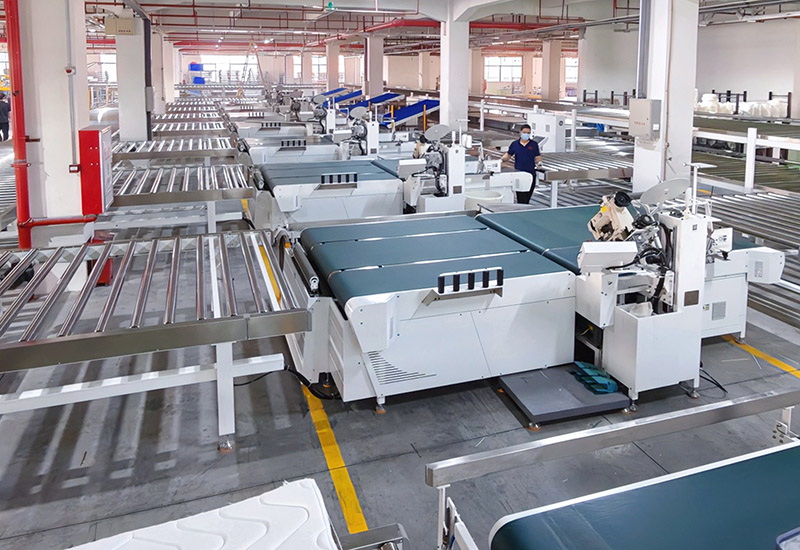
Guangdong Qiangyi Intelligent Manufacturing Technology Co., Ltd. supports mattress brands, distributors, retailers, and project buyers through its OEM mattress manufacturing service. Its workflow covers requirement confirmation, quotation, material procurement, production planning, manufacturing, inspection, packaging, and shipping. Buyers can also review the company’s quality assurance process and broader mattress product range when preparing a program. For time-sensitive orders, the useful starting point is a controlled specification and an agreed milestone plan, so material changes, sample revisions, inspection, packing, and logistics can be discussed before they become last-minute delivery problems.
Conclusion
Lead-time risk is easier to control when buyers stop treating delivery as a single factory promise. The schedule begins with specification approval and continues through material readiness, production, inspection, packing, and shipment handover. Clear freeze dates, controlled changes, early packaging approval, and visible milestones make delays easier to identify while there is still time to respond. For repeat orders, maintaining one approved reference file can also reduce unnecessary reconfirmation and keep future production planning more predictable.
FAQs
1. When should lead time start for an OEM mattress order?
Lead time should have a clearly defined starting point, usually after the required commercial and technical approvals are complete. Buyers should confirm exactly which approvals trigger material purchasing and production scheduling.
2. Can changing one mattress material delay the whole order?
Yes. A material change may require new purchasing, sampling, testing, or construction review. Its effect depends on availability and whether the replacement changes comfort, dimensions, appearance, or production steps.
3. Why can packaging cause delays after mattresses are finished?
Private-label packaging may require artwork approval, printing, barcode checks, labels, inserts, and shipping marks. If these are finalized late, completed mattresses may still have to wait before packing and dispatch.
4. How can buyers make repeat mattress orders faster?
Keep one controlled reference containing the approved construction, materials, dimensions, cover, packaging, labels, tolerances, and change history. This reduces repeated decisions and helps the factory identify genuine revisions quickly.
5. What should buyers ask when a mattress order begins to slip?
Ask which milestone is delayed, what caused it, which materials or processes are affected, the revised completion date, and what buyer decision is required. Specific status information is more useful than a general delay notice.